January’s news of the month centres on economic growth and the ecosystem in which it actually happens: a bold, ambitious one.
In a raw and unusually candid note about his time as Prime Minister, Rishi Sunak wrote that political pressure motivated him away from a strategic focus on economic growth and towards what he termed “affordability”. His own verdict was that this was a “[costly] mistake”. The note itself was written to draw the current Prime Minister, Keir Starmer’s, attention to what he believes are the same errors being repeated (link below).
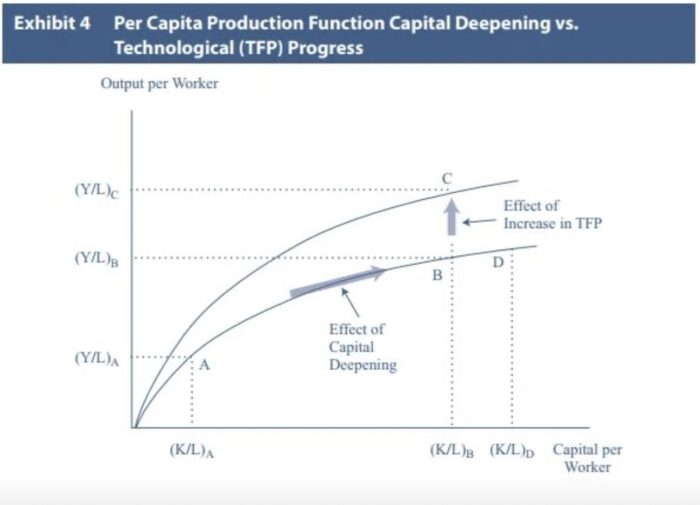
That ambitious ecosystem, in which growth happens, rests on three key drivers: the accumulation of capital stock, increases in labour input, and technological progress.
For years, governments, from prime ministers before Sunak to the present one, have tended to operate within what is politically acceptable rather than what is economically optimal. When that happens, the economic consequences of the trade-off affects us all. But entrepreneurs (risk takers by default), as far as they are able, step into the space by creating firms.
Firms matter in any growth model, and new firms matter even more. They create markets, intensify competition, and produce more output from the same labour and capital. The UK is widely regarded as underperforming on this measure, which was Sunak’s underlying point. Yet even in lacklustre conditions, companies are still being formed and they are contributing to growth, in my view, despite the environment rather than because of it.
In that spirit, Synthesia’s latest fundraising is worth celebrating. A leader in generative AI video, it reached a $4 billion valuation after a $200 million Series E round led by Google Ventures, nearly doubling its 2025 valuation as it pivots towards interactive AI agents for enterprise learning.
An honourable mention goes to Faculty’s $1 billion exit to Accenture, and to ElevenLabs, AI voice start-up, which, since I delayed publishing this, has raised $500 million at an $11 billion valuation. The latter was building in AI before it became fashionable. These firms, that have chosen to build from the UK, are contributing significantly to economic growth.
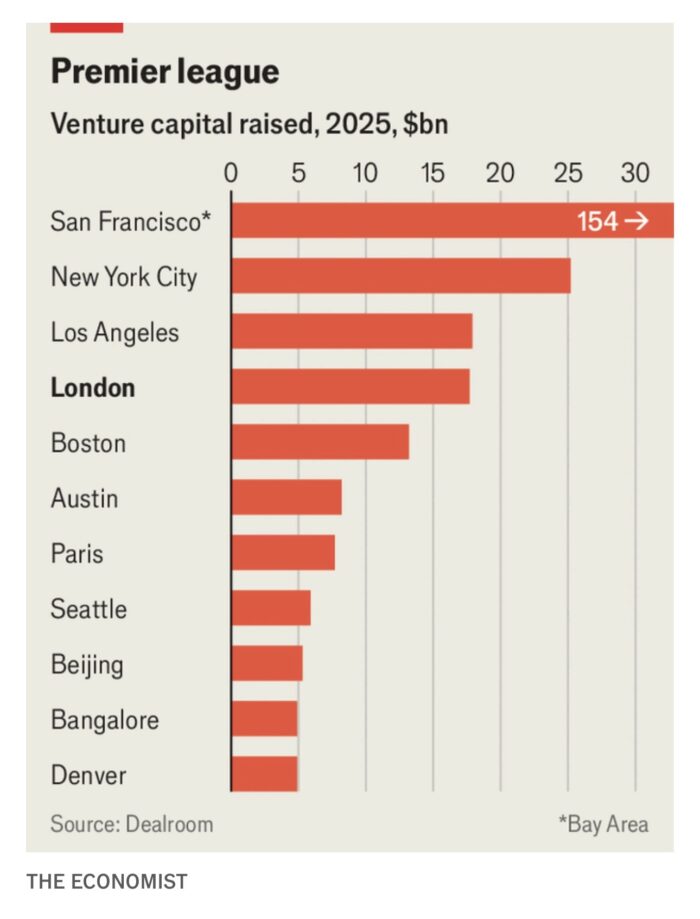
These are only examples. The Economist noted in January that, outside the United States, London is the leading destination for founders driven by this same ambition. They come for the depth and diversity of the labour market, the culture of the city, and the availability of capital, often present at early stages, to finance new ventures.
These are extremely great for London and the UK in general.
Sources: